Facts checked 2026-11-15.
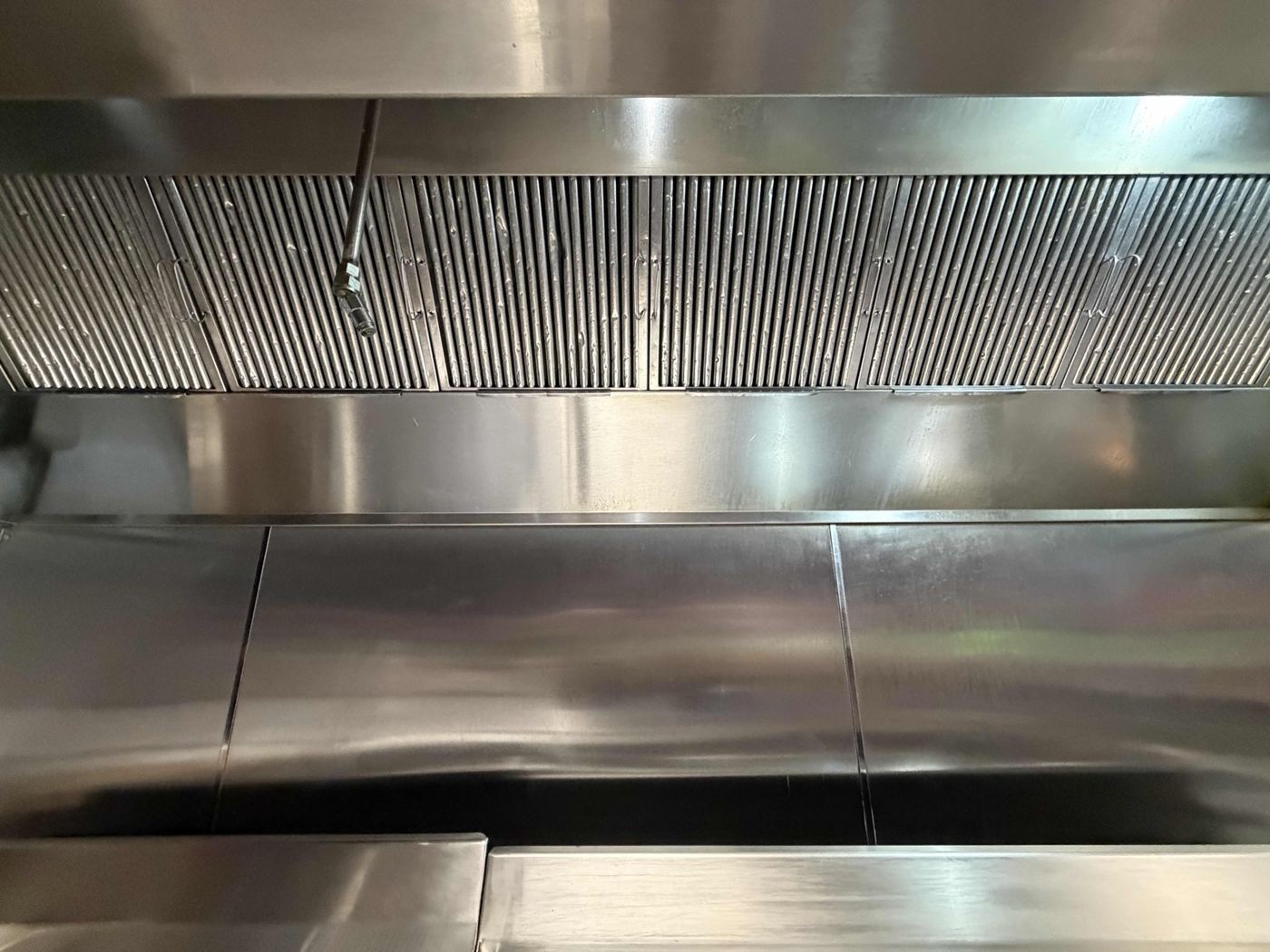
Grease collects in a kitchen hood, its filters, the duct and the fan. Enter your Georgia ZIP code and the cleaning job on Commercial Kitchen Connect, and the request goes to a hood cleaning company that covers your area.
The parts that get cleaned
A full cleaning follows the whole path the smoke takes: hood, filters, duct and exhaust fan. Ask each company whether its price and visit include all four or only the hood and filters.
The fire rule in Georgia
Rule 120-3-3 adopts the 2024 edition of NFPA 96, the national standard for ventilation control and fire protection of commercial cooking, effective May 27, 2025. The Georgia fire code adds that cooking appliances and every part of the ventilation system must be operated and maintained under that standard.
The standard itself sets the cleaning schedule, and this page does not reproduce it. Your fire marshal or insurer can say which schedule your kitchen follows.
Get prices for this job. Send one request and pick how many local companies quote it.
Get quotesThe health rules look at hoods too
Health inspectors care about hoods for sanitation reasons. Rule 511-6-1-.05 says a hood system must stop grease from dripping onto food or equipment, and its filters must slide out easily. Rule 511-6-1-.07 says exhaust and intake ducts are to be cleaned and filters replaced so that neither becomes a source of contamination.
No state license for this trade
Georgia's fire company licensing rule, 120-3-23, applies to portable extinguishers and kitchen suppression systems. Duct cleaning is not among them, and research for this site found no separate state license for cleaners. The local fire marshal, as the authority having jurisdiction, decides what training or proof it accepts. Phone that office before hiring, and ask what it wants to see afterward, such as a service report or a sticker on the hood.
Cleaners and the suppression system
Cleaning crews work close to the suppression system. If that system is impaired, cooking has to stop. Only a firm licensed under Rule 120-3-23 may service or repair it. During a cleaning visit, read the blue tag on the system and note the date on it.
Questions before you hire
- Does the company clean the hood, filters, duct and fan, or only part of them?
- Can it reach each section of duct, and where would new access panels go?
- What does it leave behind: a report, photos or a dated sticker?
- Can it provide a certificate of insurance?
- Does its work satisfy your fire marshal?
Keep every report in the kitchen office so that you can show it to the fire marshal or an insurer.
Where the paperwork goes
A cleaning only helps your records if the paperwork ends up somewhere findable. Request a dated report after each visit and file it with the kitchen's other safety documents. An inspector may ask for it, and so may an insurer after a claim. If the marshal expects a sticker on the hood, the date on the sticker should match the report.
Questions
How often must a Georgia restaurant hood be cleaned?
NFPA 96 sets the schedule and Georgia adopts it. Your local fire marshal can tell you which schedule fits your kitchen.
Are hood cleaners licensed by the state of Georgia?
Not under Rule 120-3-23, which reaches extinguisher and suppression firms alone. Ask the fire marshal what proof of training it takes.
What do health inspectors check on a hood?
Rule 511-6-1-.05 says a hood must keep grease from dripping on food, equipment or utensils, and filters must come out easily for cleaning.
Which office enforces hood rules in Georgia?
The local fire marshal enforces the fire code and NFPA 96, while the county health office enforces the food service rules.