Facts checked 2026-11-15.
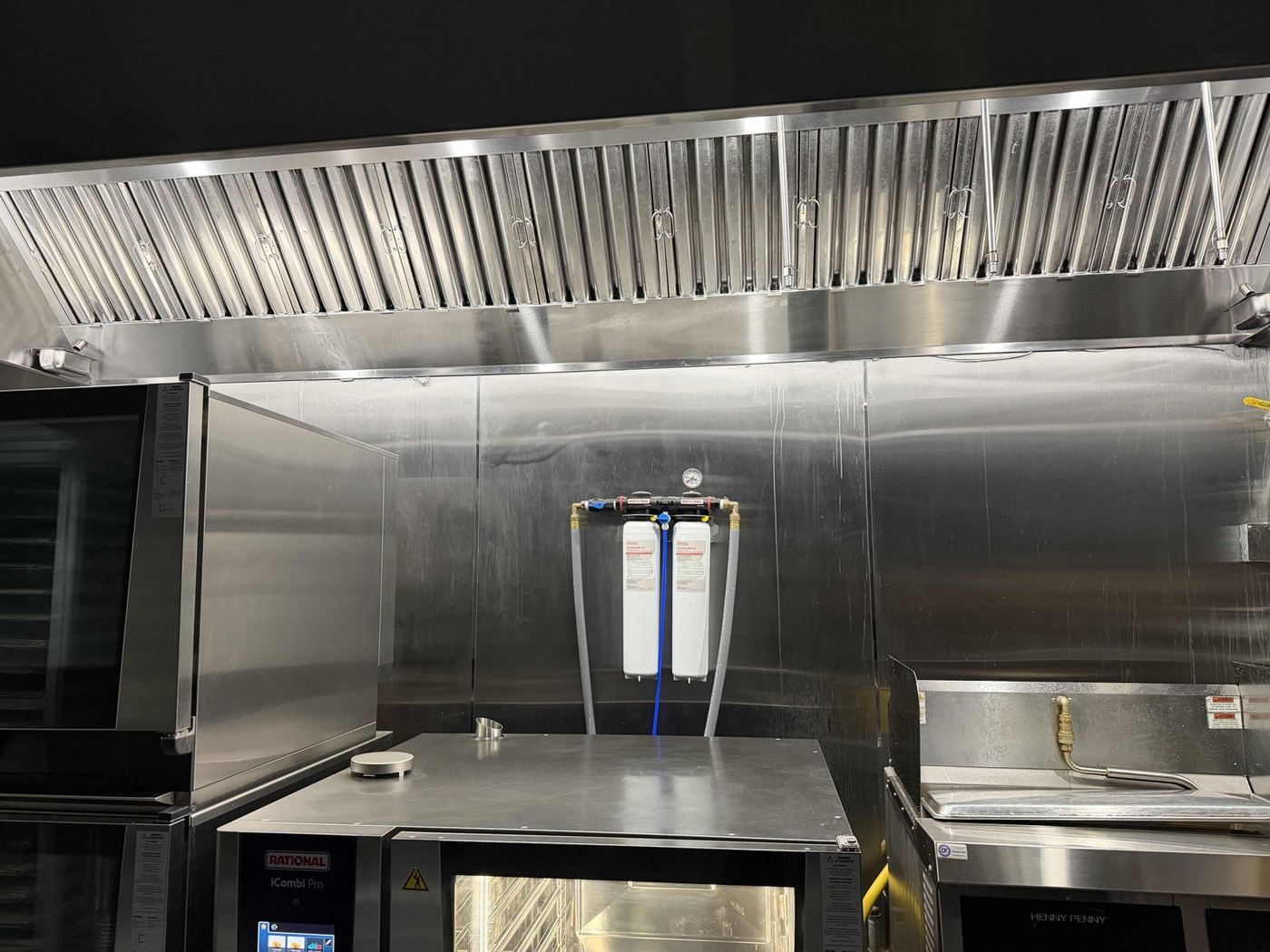
The hood over your cooking line is only one piece. It connects to a grease duct, a roof fan and a supply of makeup air. Florida's building code treats these parts as a single system and tests it as one before final approval. Your request on Commercial Kitchen Connect goes to HVAC or mechanical contractors that cover your ZIP code.
Jobs in this category
People ask for a new hood, a new exhaust fan, a filter swap, grease containment, repairs, or air balance work that closes out a permit. Choose the closest match on the form so the request lands with a company that does that job.
Type I and Type II hoods
The code defines two kinds. A Type I hood sits over fryers, griddles, charbroilers and ranges, which put out grease or smoke. A Type II hood sits over dishwashers and other gear that releases only heat or moisture.
Some appliances are exempt, for instance electric units that pass the UL 710B low-grease test. The building department rules on whether yours qualifies.
Get prices for this job. Send one request and pick how many local companies quote it.
Get quotesAirflow and ductwork
The amount of air a hood must pull depends on what is cooking under it. The code sets a rate for every foot of hood, with higher numbers for heavy cooking and for hoods standing in the open. As one example, a wall canopy over heavy cooking calls for 400 cubic feet per minute per foot.
The duct that sends greasy air up to the roof faces tough rules. It needs heavy steel, welded seams that hold liquid, cleanouts at set intervals and space between it and anything combustible. Wherever it crosses a wall or floor, a fire-rated enclosure surrounds it.
Makeup air and balance
Every cubic foot pulled out has to come back in. The code asks for makeup air that roughly equals the exhaust and starts when the fan starts. The plans carry a schedule for balancing outdoor air, and the installer should give you a copy.
Signs of trouble
Watch for grease dripping from the hood or the base of the roof fan. Smoke that hangs in the room, a kitchen that seems short of air and doors that pull hard when the fan runs are other clues. An access panel that is missing or blocked needs repair too.
When equipment changes
Adding a fryer or moving a cooking line can change the load on the hood and the suppression system. Before you buy, ask a licensed company if the current setup handles the change. Ask the building department whether a permit applies.
Who can do the work
Florida licenses mechanical and sheet metal contractors, and the permit office says which license it accepts for hood and duct work. The suppression piece needs its own State Fire Marshal license. The DBPR license search lets you look up any contractor.
Questions
Is a Type I hood required in every restaurant kitchen?
A Type I hood is required over cooking that gives off grease or smoke. Equipment that releases only heat or moisture can go under a Type II hood.
Who runs the test on a new restaurant hood?
The Florida Mechanical Code requires a performance test before final approval, covering exhaust and makeup airflow and smoke capture. Ask your building department which testers it accepts.
How do I verify a hood contractor's license in Florida?
The DBPR license search on myfloridalicense.com lists contractors. Companies that work on fire suppression are licensed separately through the State Fire Marshal.