Facts checked 2026-11-15.
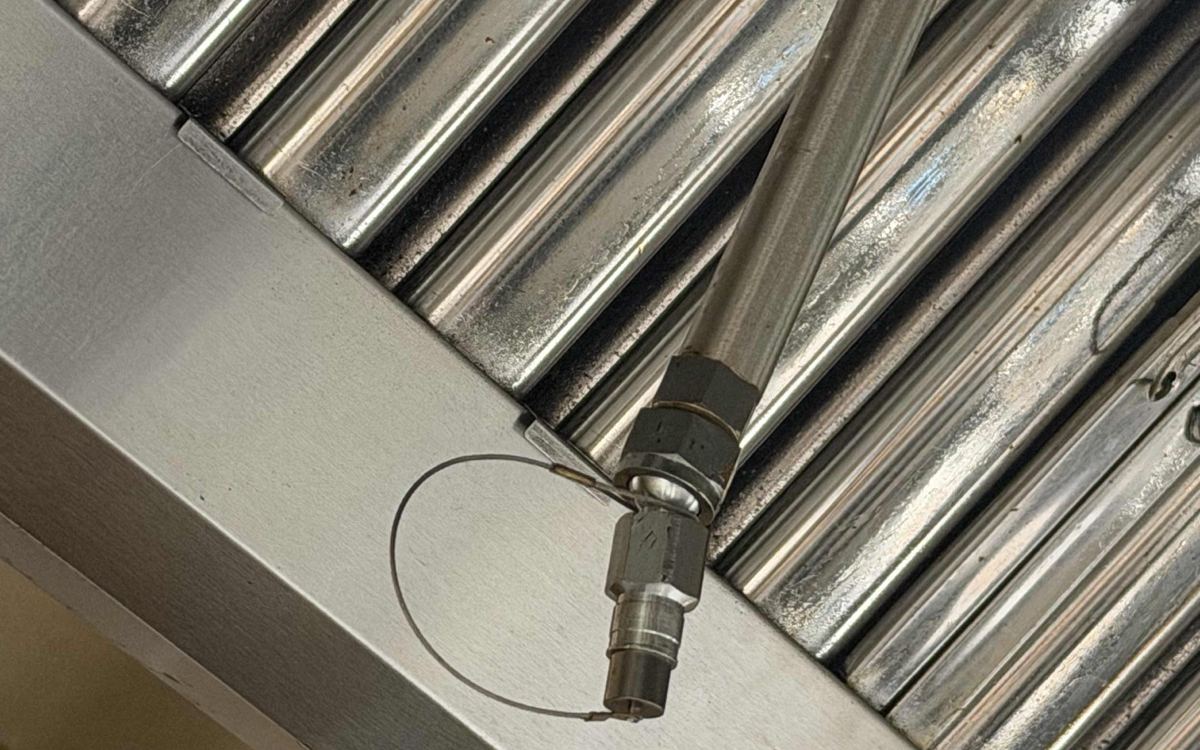
Above the cooking line, a suppression system holds nozzles that spray wet chemical once a fire starts. Florida requires one wherever an appliance sits under a Type I hood. When you send a request on Commercial Kitchen Connect, it goes to fire suppression companies that serve your ZIP code.
Types of jobs
Requests fall into three groups. A new system goes in alongside a new kitchen. A change moves or adds nozzles after appliances are added or relocated. An inspection is the routine visit that earns the system a fresh tag.
How the system responds
On discharge, the system also shuts off gas or electric power to the cooking equipment, and a person must reset it by hand. A manual pull station is mounted near an exit from the cooking area. The code places it 10 to 20 feet from the exhaust and 42 to 48 inches off the floor.
Most restaurants install a pre-engineered system. It is built and listed for use inside the limits its manufacturer tested. The code asks for testing to UL 300, the fire test standard for kitchen systems.
Get prices for this job. Send one request and pick how many local companies quote it.
Get quotesSigns it is due for service
Read the tag on the tank first. A date more than six months old is the common warning sign. A missing tag, a nozzle cap that has fallen off, a new appliance under the hood or a note from an inspector also point to service.
Service timing and records
Twice a year is the usual expectation. A fire checklist from one Florida county wants a tag dated within six months, and the state's dealer rules refer to a semi-annual report. Your fire marshal makes the final call.
Each visit should leave you a tag showing the company's name and the technician's permit number, along with a signed report. The dealer holds its copy for at least three years, and you should hold yours.
Who can do this work
Installing, testing, recharging or servicing these systems takes a State Fire Marshal license under state law. Restaurant hood systems are Class D, each business location must be licensed on its own, and technicians must hold permits.
Fire chiefs, fire inspectors and insurance inspectors are allowed to inspect without the license.
Vetting a company
Request the license number and the technician's permit number, then verify both with the State Fire Marshal's licensing office. Read the tag the technician leaves behind. Advertising this work without a license is a crime in Florida.
Before a company calls
Collect the hood size, the list of appliances beneath it, the date on the current tag and the latest report. A new system also needs the plans.
Questions
How frequently should a restaurant suppression system be serviced?
Service usually comes every six months, and the tag should carry a date within that window. The local fire marshal sets the final schedule.
Which license must a Florida suppression company hold?
Pre-engineered systems, which include restaurant hood systems, fall under a Class D license from the State Fire Marshal. Licenses are issued per location, and technicians carry individual permits.
Should a fryer or griddle be moved without calling first?
No, talk to the licensed company first. Nozzles are aimed at the appliances now under the hood, so a move can leave a burner uncovered.