Facts checked 2026-11-15.
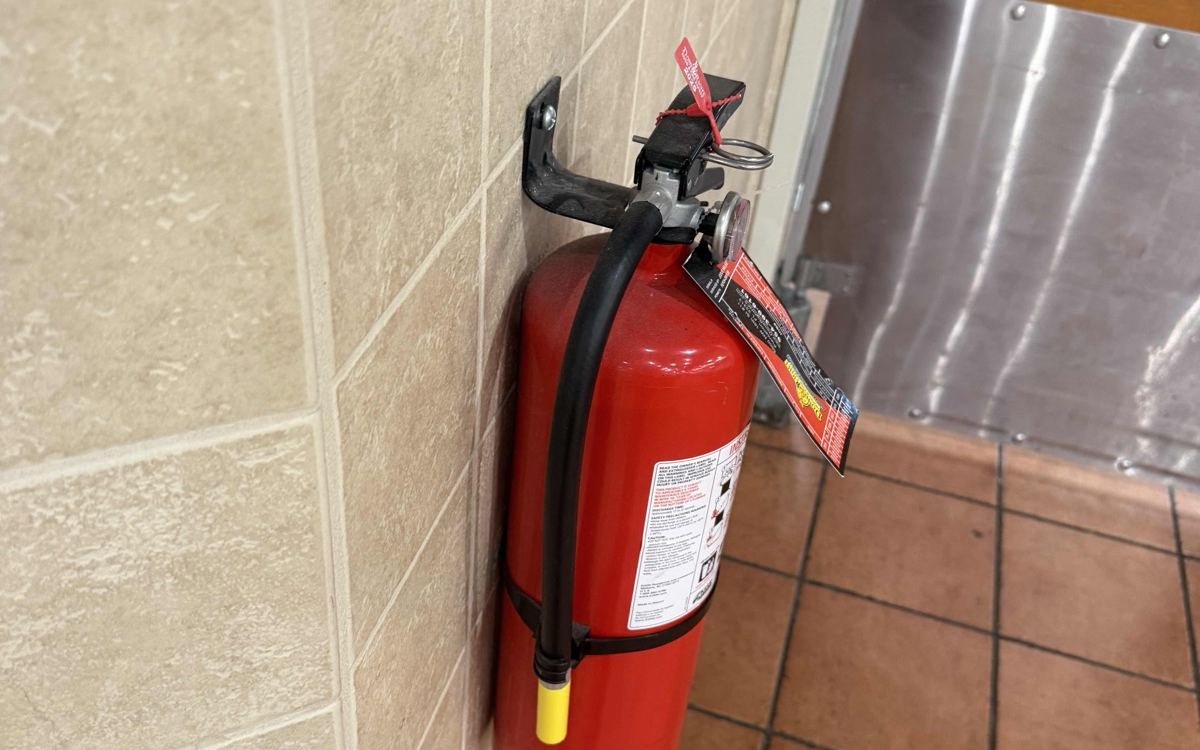
Near the cooking line, a restaurant needs a Class K extinguisher, and the rest of the building needs the ordinary kinds. Every unit gets a yearly service and a tag. A request on Commercial Kitchen Connect is passed to fire equipment companies that serve your ZIP code.
What a yearly service includes
The visit follows NFPA 10 and the manufacturer's manual. A technician examines each extinguisher, puts on a new tamper seal and attaches a tag. Certain types need heavier work on a longer cycle, such as an internal exam or a pressure test.
Why Class K matters
Class K extinguishers are made for fires in cooking oil and grease. DBPR's plan packet says Class K units and automatic hood suppression are required wherever cooking gives off grease-laden vapors or smoke. Under the building code, a portable extinguisher must be within 30 feet of commercial cooking equipment.
A hand-held unit cannot replace the hood system. Both stay in place together.
Get prices for this job. Send one request and pick how many local companies quote it.
Get quotesSigns a unit needs attention
The plainest sign is a tag more than a year old. A broken seal, a gauge reading outside the green zone, a dented or rusty cylinder, a blocked hose, or a unit that has been carried away from the cooking line also count.
Longer service cycles
The guidance here was written to an older edition of NFPA 10. By it, some types need an internal exam every five or six years, and a pressure test every five or twelve years depending on the type. Florida has adopted a newer edition, so ask the company which intervals fit your units.
Who may service extinguishers
State law requires a State Fire Marshal license for any business that services, recharges, tests or installs extinguishers. Each location carries its own license, and each technician must hold a permit.
Classes A, B and C cover extinguisher work and differ slightly in what they exclude. Class D covers pre-engineered systems. Fire inspectors and insurance inspectors may look over your extinguishers without a license.
Reading the invoice
Afterward you should receive an invoice listing the business name, address and license number, plus the serial number and the work done on each unit. Match those serial numbers against the units on your wall and ask the company about any difference.
What your staff may do
Staff can look over each unit about every 30 days. The fire marshal or the service company can tell you what to check and which record to keep.
Before a company calls
Count the extinguishers, write down the type printed on each label and read the date on the last tag. Say whether the building has sprinklers or a hood suppression system.
Questions
Must a Florida restaurant have a Class K extinguisher?
Yes, wherever cooking produces grease-laden vapor or smoke, per DBPR's plan packet. Mount it within 30 feet of the cooking equipment.
How often do restaurant extinguishers get serviced?
Service happens at least yearly, and each unit receives a tag with the servicer's name and permit number. Some types also need longer-cycle work.
May my own staff recharge or test the units?
No. Staff can make the monthly visual check, but recharging and testing need a business licensed by the State Fire Marshal and a permitted technician.